Discover how bacteria can be genetically engineered to have new characteristics which make them useful for scientific research and medicine.
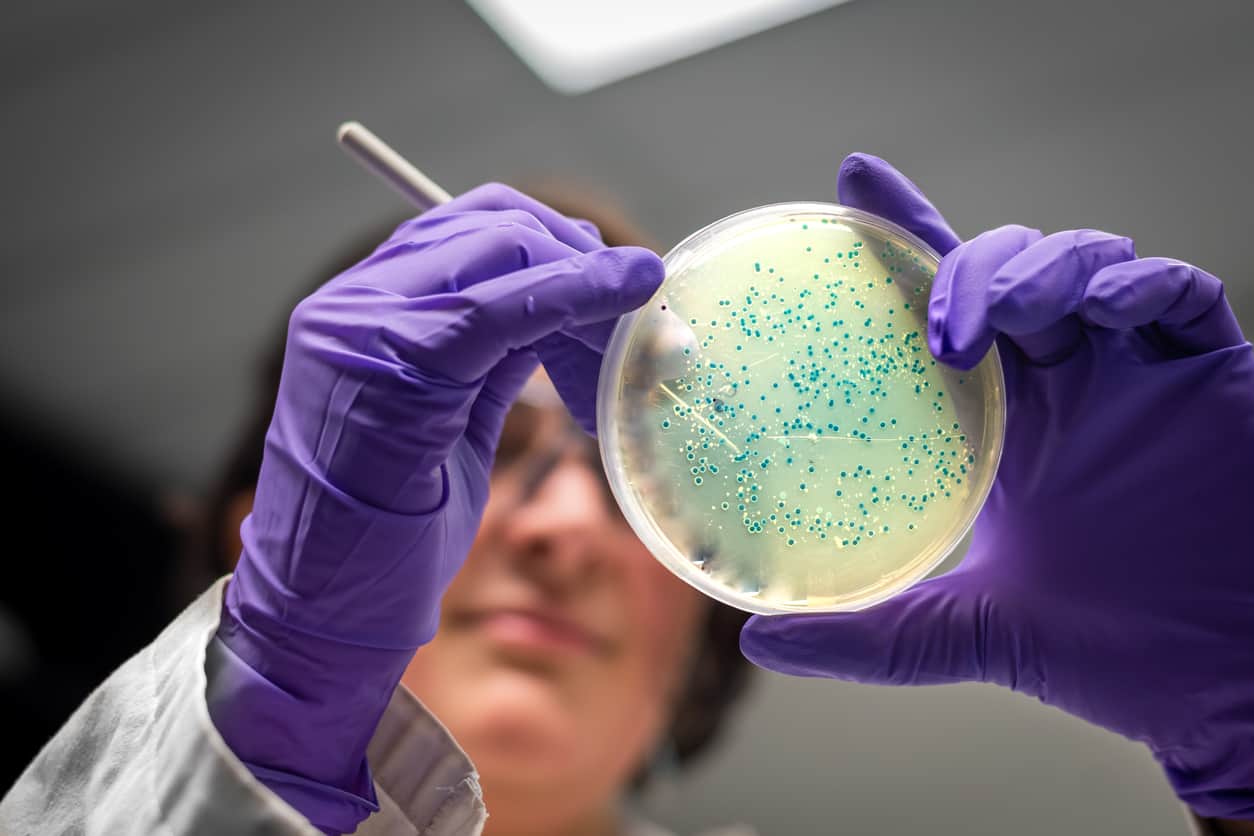
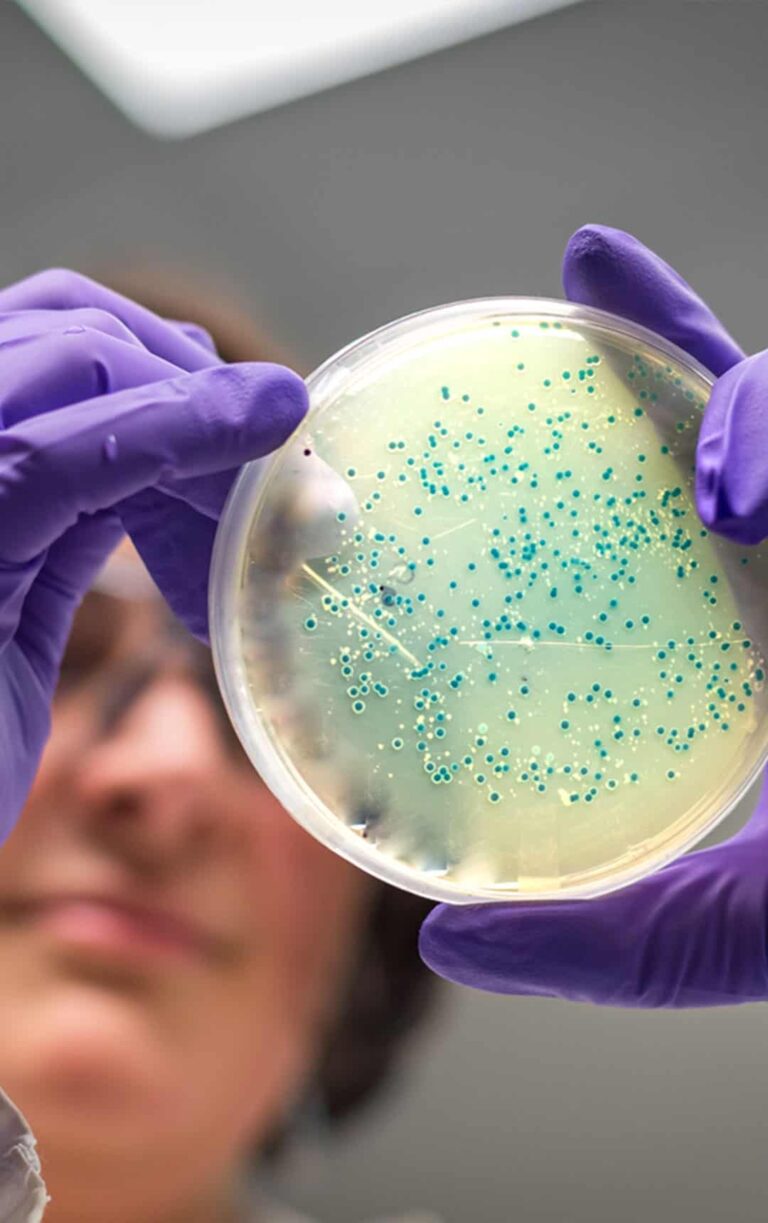
Discover how bacteria can be genetically engineered to have new characteristics which make them useful for scientific research and medicine.
Students follow a protocol to insert plasmid DNA containing a modified bacterial operon and GFP (Green Fluorescent Protein) gene into bacterial cells and learn how to use good aseptic technique to streak out their genetically modified bacteria onto agar plates. An additional hands-on activity explains the process of DNA cloning using ‘sticky ends’.
Curriculum links
Key stage 4 and post-16
Biology
- KS4 Science - Cell Biology | Health, Disease and the Development of Medicines | Evolution, Inheritance and Variation
- AS/A Level Biology - Cells | Biological Molecules | Genetics and Evolution
- OCR AS and A Level Biology - A and B- PAG 7 Microbiological techniques: 7.3 Transformation of bacteria with plasmid encoding GFP
By the end of the workshops students will have discovered:

The structure of bacterial cells (bacteria).

How bacteria can be ‘transformed’ by adding plasmid DNA.

That through genetic engineering characteristics of bacteria can be changed to do useful jobs such as produce insulin for medical use.

How electrophoresis can be used to analyse DNA samples.

How to carry out key microbiological techniques using specialist equipment including; micro-pipetting, aseptic techniques and transformation of bacteria.
School trip prices
We allow a ratio of 1 adult to every 5 children for most groups. Additional adults over this ratio will be charged. In the case of SEN groups, we may offer further free adult support on request – please contact us to discuss your requirements.
Teachers and and adult helpers go FREE!
Workshop price
£11.95 per pupil
(min 12, max 24)
Science centre visit add-on
£6.95 per pupil
FREE 15-minute careers workshop add-on
Optional add-on focused on STEM careers and designed to support Gatsby Benchmarks
Other workshops you may enjoy
Meets Gatsby Benchmark 4
Key stage 4 and post-16
Biology
Microbiology
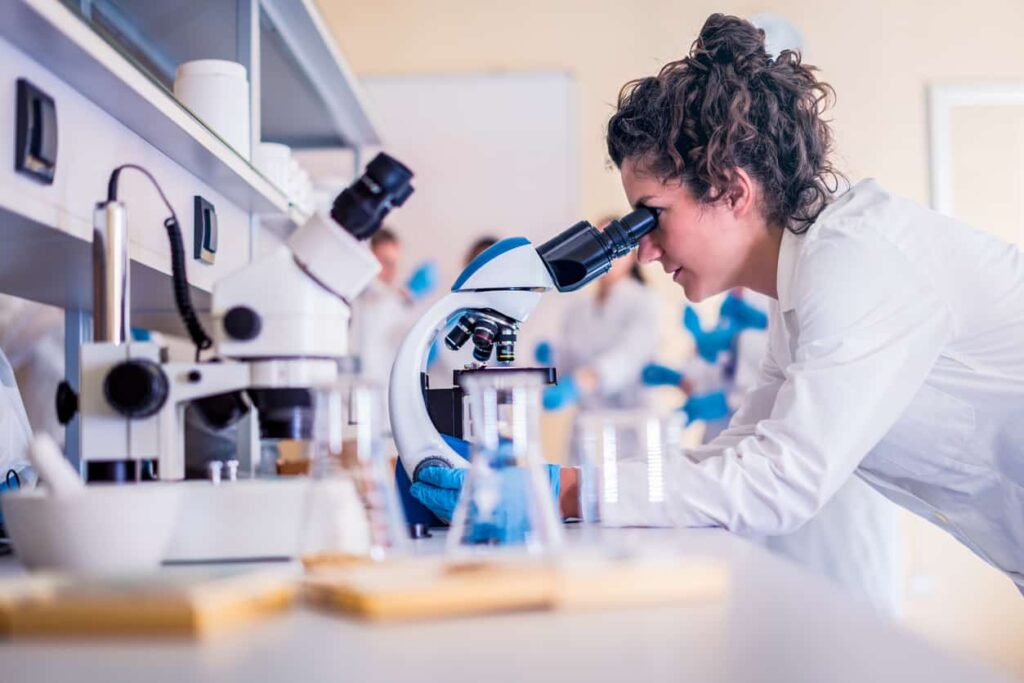
Students will practice microbiological laboratory techniques to get up close to bacteria.
Meets Gatsby Benchmark 4
Key stage 4 and post-16
Biology
Forensic DNA
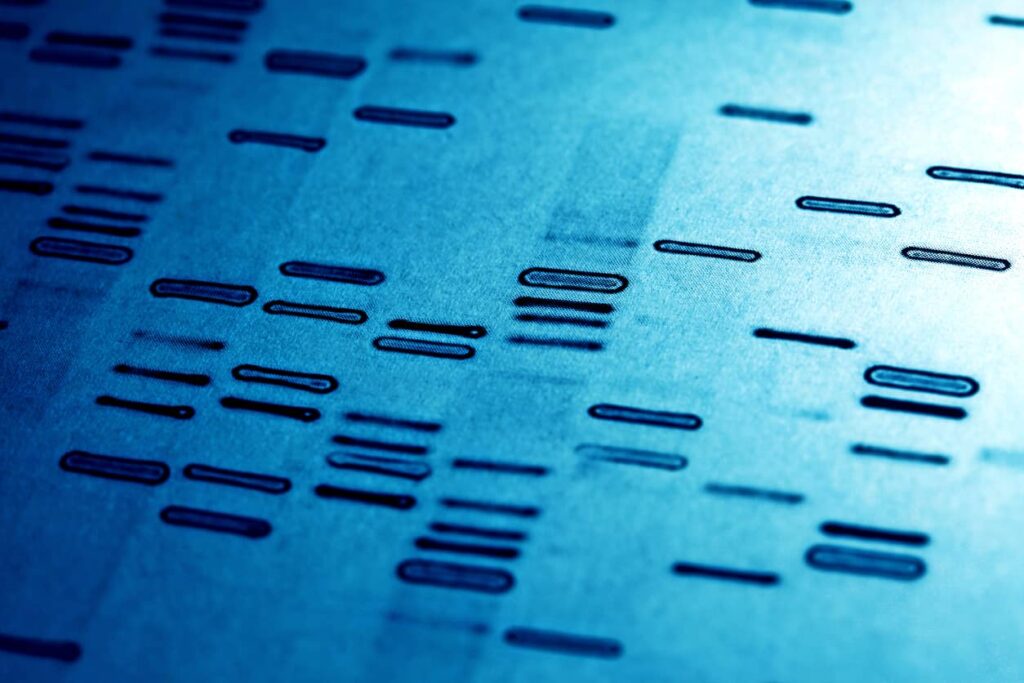
Students use gel electrophoresis to compare DNA fingerprints