
In recognition of International Women’s Day, Life throws the spotlight on women working in exciting STEM jobs in the North East. We caught up with Clara Ferreira, who teaches neuroscience at Northumbria University and also takes part in Life’s ‘I’m a Scientist’ programme, which gives schoolchildren the opportunity to talk to scientists, share their personal stories of their love of science and how it created career opportunities for them in the field.
Like many other children, I was fascinated with our natural world, but particularly with the differences and similarities in animal and human behaviour.
I enjoyed science in school, particularly biology and chemistry and never considered it a subject for boys.
My mum was probably one of my earliest role models as she was a critical thinker and had a ‘can do’ attitude to fixing everything around the house. She studied biology and constantly pursued new approaches in her research in linguistics.
I studied in Portugal up until my Master’s, a slightly different system to the UK. I did A levels in Portuguese, maths, biology and chemistry then a degree with teaching certification in biology and geology and a Master of Research in cellular and molecular biology, all at the University of Aveiro. I then did a DPhil in physiology, anatomy and genetics at the University of Oxford.
There have been several challenges along the way. The most significant has been managing the pressure to publish research consistently while raising a family largely on my own.
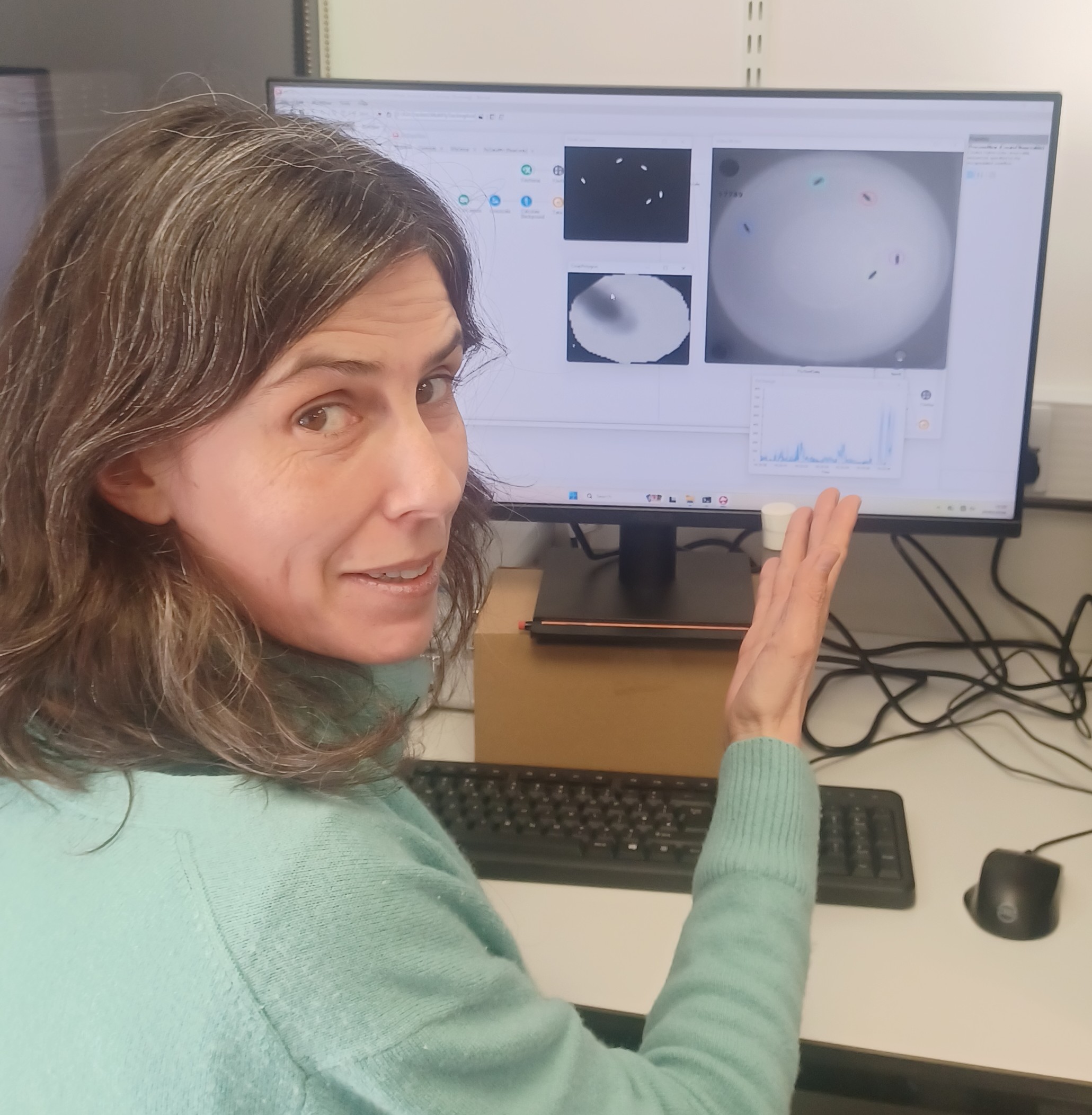
I teach and do research in neuroscience at Northumbria University. I study how fly brains produce behaviours, predominantly the ‘safety in numbers’ effect – how being in a group changes individual behaviour.
Through my job I love discussing with peers, reading and especially thinking and coming up with new ideas.
Looking ahead, my goal is to continue to push the boundaries of what we understand about the neurobiological capabilities of animals that we humans usually perceive as ‘simple’. I think we have much more in common than we might think, we just have to look more closely.
I think it is very important to encourage more girls and women into science. I have been lucky to meet and work with incredible researchers who are also amazing female role models. I think exposure to these role models and benefitting from working with people that understand and accommodate the challenges we face, is a great way to go. At least it worked for me!