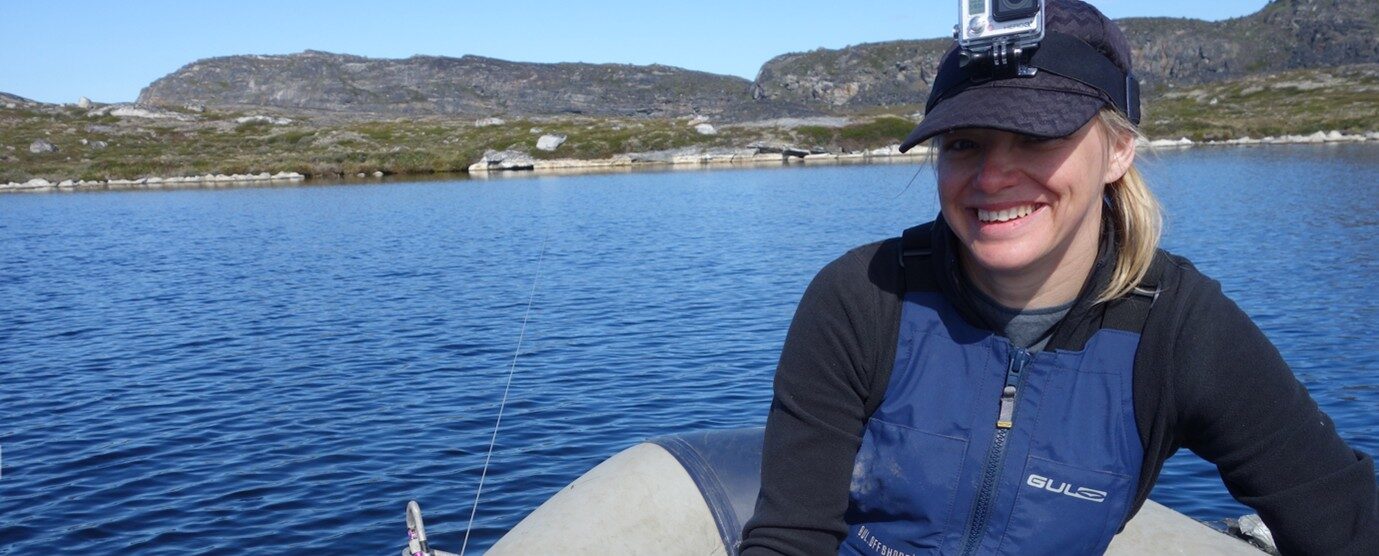

In recognition of International Women’s Day, Life throws the spotlight on women working in exciting STEM jobs in the North East. We caught up with Leanne Wake, a Senior Lecturer in Physical Geography at Northumbria University, who also takes part in Life’s ‘I’m a Scientist’ programme, which gives schoolchildren the opportunity to talk to scientists, share their personal stories of their love of science and how it created career opportunities for them in the field.
I never considered science as something just for boys as I was regularly with my dad growing up watching him doing engineering type things and solving problems, so it all seemed very natural.
I also lived next to the coast, and I loved going to the beach where I would find pebbles and dig in the sand, which made me start to wonder how they got there and why they looked like they did. That definitely sparked my curiosity though I didn’t realise at the time that it was science that I was interested in!
My parents definitely continued to support my love of science and I know they worked hard to buy my first computer.
After my GCSEs, I decided to study A Levels in Maths, German, Physics and Chemistry and when I didn’t get the grades to do my first-choice subject at Durham University I decided to still go there but to study Geophysics. I then went on to study an MSci in Geophysical Sciences and a PhD in Geophysics.
Now I’m a Senior Lecturer in Physical Geography and the thing I love most about my job is the fieldwork. I’ve been very fortunate to be able to work in Greenland a few times as my research tries to understand how the Arctic is changing.
Looking ahead, I want to reduce the carbon footprint of my research, which essentially means less travel, so working remotely with communities in the Arctic to set up monitoring programmes and also monitoring how much computational time I use.
I think it’s important to encourage more girls and women into science. Part of that is normalising subjects that have been seen as ‘for boys’ and not constantly pointing out that they were once male-dominated. Instead, all career paths should be presented as open to everyone from the start.
When we stop labelling subjects as traditionally male or traditionally female, we remove some of the psychological barriers that can discourage people from taking part.