
In recognition of International Women’s Day, Life throws the spotlight on women working in exciting STEM jobs in the North East. We caught up with Penny Timpert, a patient research partner at several Swiss hospitals, who also takes part in Life’s ‘I’m a Scientist’ programme, which gives schoolchildren the opportunity to talk to scientists, share their personal stories of their love of science and how it created career opportunities for them in the field.
My interest in science started very early. I was always curious and wanted to understand how things worked – not what happened, but why. Science at school gave me a way to explore that curiosity in a structured, exciting way and make better sense of the science all around us.
I also loved problem-solving and when I was small, I wanted to design artificial limbs. My best friend at primary school was born with the lower half of her right arm missing and I wanted to design better prosthetics for her and people like her.
I never considered science as something for boys, but my headmaster at secondary school certainly did. When I chose Craft, Design & Technology (CDT) O level, my parents were called in to see the school headmaster who told them to change my choice to Art, a much more “suitable“ class for a girl. My parents told him they supported my decision. I was the only girl in the CDT class but the next year, there were four girls and no more questions about “suitability”.
My parents were early role models for me as my mum is a Chemist and my Dad is a Chemical Engineer.
Science was (and remains) a key part of meal-table discussions in our family. I was brought up appreciating that science is all around us, from getting your morning toast just right to making sure your cereal stays fresh & crispy in the box and then gets just the right amount of softer when you add milk!
I studied maths, physics, chemistry, computer science and general studies at A level before going on to do a BSc in chemistry and computer science at university.
After that I started work as a Development Chemist, taking ideas out of the lab and into production and in parallel I completed an MSc in polymer science and technology part-time, which strengthened my technical foundation and analytical thinking.
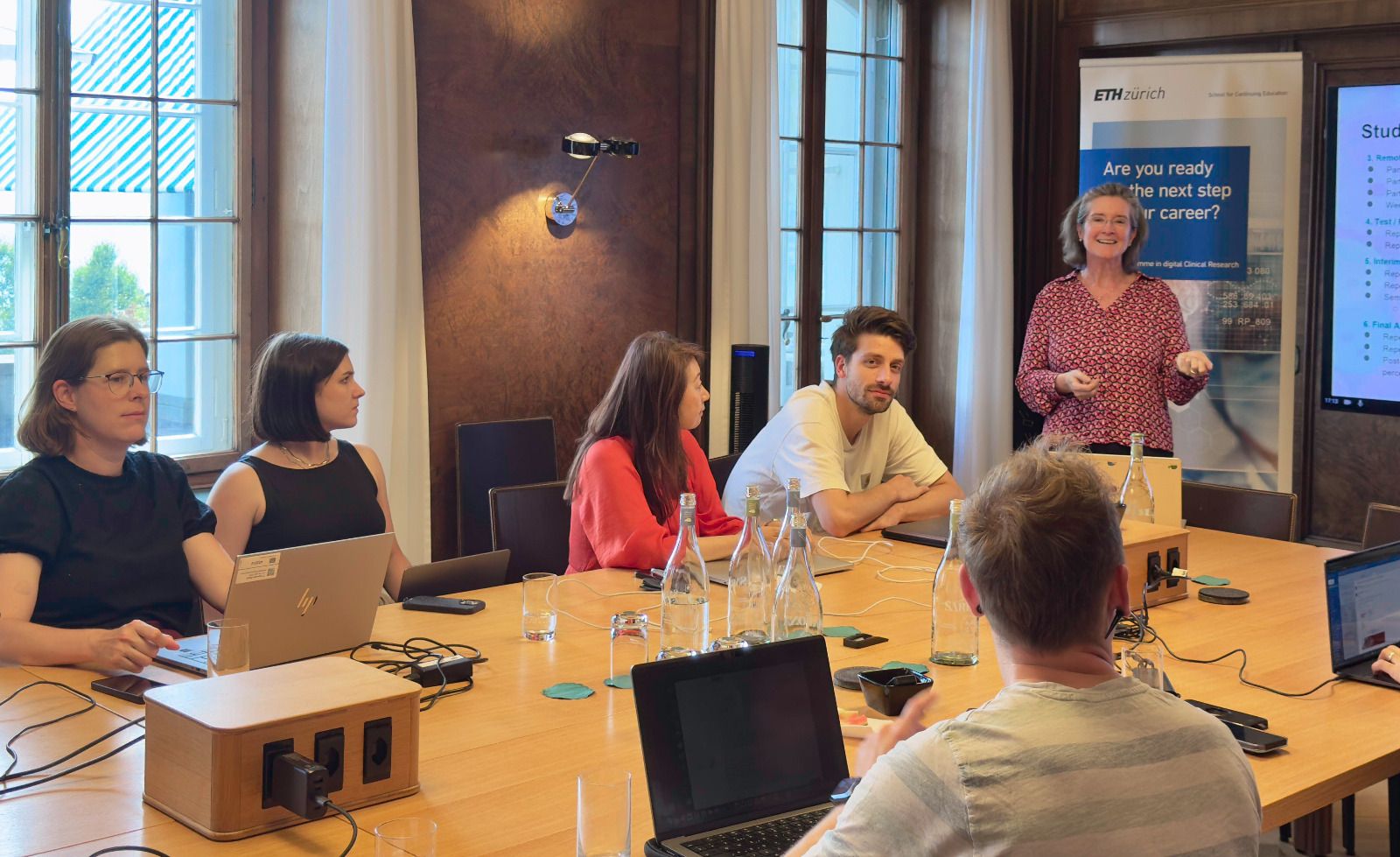
Most recently, I completed a certificate of advanced studies (CAS) in digital clinical trials at ETH Zürich – proof that learning doesn’t stop just because you’ve grown a few grey hairs!
Today I work at the interface of science, regulation, digital innovation and patient engagement, connecting science, people and systems to help turn complex ideas into real-world impact.
I’m particularly excited about responsible AI in healthcare and digital clinical trials and making innovation both powerful and ethical.
We absolutely need more girls and women in science because diversity makes our lives better. If anyone is curious, analytical, creative or loves solving problems, then science needs them. Science is not a narrow lab-only career, it is a gateway to leadership, innovation and real-world impact.