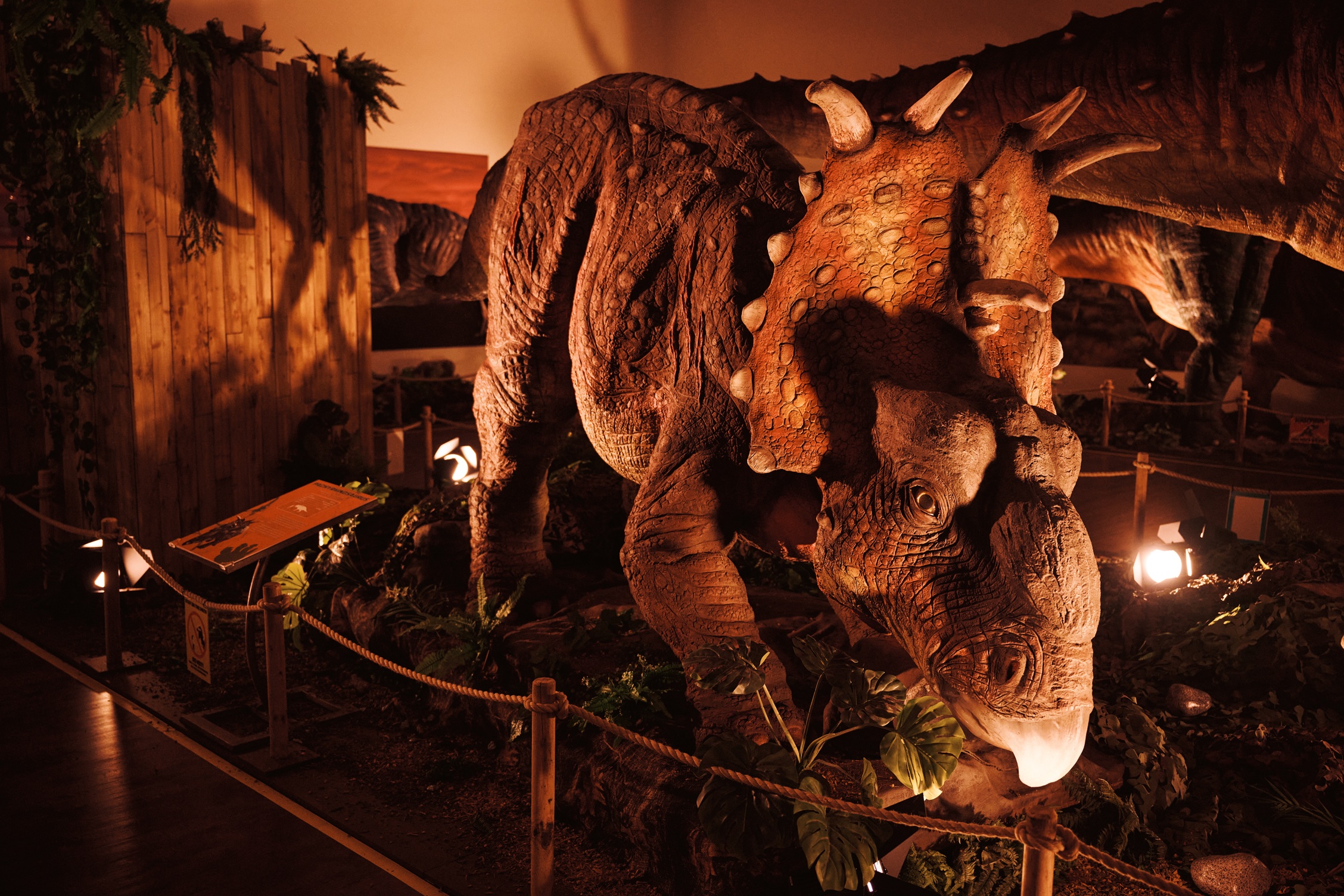

Bringing a collection of giant animatronic dinosaurs to the UK for the first time has been a dream come true for Dinosaurios México as Managing Director Rafael Estevez reflects.

“It has been a journey involving international logistics, engineering, creativity and, above all, a shared passion for inspiring curiosity about the prehistoric world.
Working with Life has given us the opportunity to introduce our work to new audiences and be part of an experience that connects the fascination of dinosaurs with scientific discovery.
But behind an exhibition of this scale is much more than technology, manufacturing and transport. It takes dedicated people, specialist knowledge and a huge amount of coordination to turn an ambitious project into an experience enjoyed by thousands of visitors.
From childhood fascination to a career
Our company was born from the curiosity we all had as children, combined with a professional passion for science and entertainment. We soon realised that dinosaurs offered a unique opportunity to bring these interests together, combining complex engineering with the fascination of a lost world. Essentially, we turned our childhood obsession into a full-time job!
Dinosaurs disappeared around 66 million years ago, but their appeal has never faded. It’s their extraordinary size, appearance and mystery that continue to capture our imaginations.
The science and technology behind bringing dinosaurs to life
Creating a convincing animatronic dinosaur involves much more than making a large model move. The real secret is in the detail.
We work closely with palaeontologists to understand the biomechanics of these prehistoric animals and how they might have moved. How did they breathe? How did their muscles work? How would their eyes and heads have moved?
It’s the smaller details that make the biggest difference: the blinking of an eye, the subtle movement of a flank to simulate breathing, carefully synchronised sounds and the way silicone skin wrinkles naturally as a dinosaur turns its neck.
Combining scientific understanding with specialist engineering and craftsmanship is what makes our work so rewarding.
Moving a prehistoric herd from Mexico to Newcastle
Bringing the exhibition to England was a huge milestone for our company and a source of immense pride. Seeing creatures we’ve spent so long designing and building come to life in a completely new country was incredibly exciting.
Getting them here, however, was quite an undertaking.
Preparation starts back in our workshop in Mexico, where many of the dinosaurs need to be partially dismantled. Key components, including tails, heads and limbs, are carefully removed to fit into shipping containers. Each piece is then packed using specialist protective materials to safeguard the electronic systems, internal mechanisms and silicone skin.
Some of our largest dinosaurs, including the T. rex and Carnotaurus, presented particular challenges. Imagine manoeuvring components measuring more than 10 metres long and four metres high, weighing hundreds of kilos! Long tails, curved necks and awkwardly shaped sections all require careful planning, specialist lifting equipment and precision handling.
Once everything arrives at its destination, the process of reassembling and testing the dinosaurs begins.
When the lorries finally arrived at Life, it was a moment of pure magic – accompanied by a very big sigh of relief!
A collaboration built on shared expertise
Seeing the dinosaurs installed at Life Science Centre was an incredible feeling. From the outset, working with the Life team has been a fantastic experience.
An exhibition of this scale relies on much more than the people visitors see on the exhibition floor. Behind the scenes, teams responsible for coordination, technical support, operations, education and visitor services all play an important role in making the experience a success.
The collaboration has also highlighted the value of bringing different areas of expertise together. Our team brings the specialist knowledge and craftsmanship involved in creating animatronic dinosaurs, while Life provides an environment where visitors can explore the science behind them.
For children, it’s often the dinosaurs’ size, power and extraordinary appearance that capture the imagination. For adults, they can inspire a sense of wonder about the scale of time and the history of our planet.
Animatronic exhibitions provide a visual and memorable way to bring these questions to life, connecting the excitement of seeing a moving dinosaur with wider subjects including palaeontology, engineering, technology and the natural world.
That’s one of the things we particularly value about working with a science centre like Life. Its wider programme of exhibitions, shows and activities gives visitors the opportunity to turn that initial fascination into a deeper interest in science and discovery.
We want to recognise and thank everyone at Life who played a part, both directly and behind the scenes. Their commitment, flexibility and enthusiasm helped make the installation possible.
We would also like to thank our own team in Mexico and the families who supported them through the demanding days of preparation and installation.
Mexican talent on an international stage
Seeing our dinosaurs in Newcastle is a particularly proud moment for everyone involved in their creation. They represent the creativity, technical knowledge and craftsmanship of our team in Mexico, demonstrating how this expertise can reach audiences far beyond our own borders.
The collaboration with Life has been about much more than bringing an exhibition from one country to another. It has been an opportunity to share knowledge, combine different areas of expertise and work towards a common goal: creating an experience that brings science closer to the public.
And if there’s one thing we’d like visitors to take away, it’s this: leave your scepticism behind and allow yourself to be amazed. You’re not simply coming to see static figures. You’re stepping into a lost world. Come closer, look into their eyes, listen carefully – and let your imagination travel back 66 million years.”