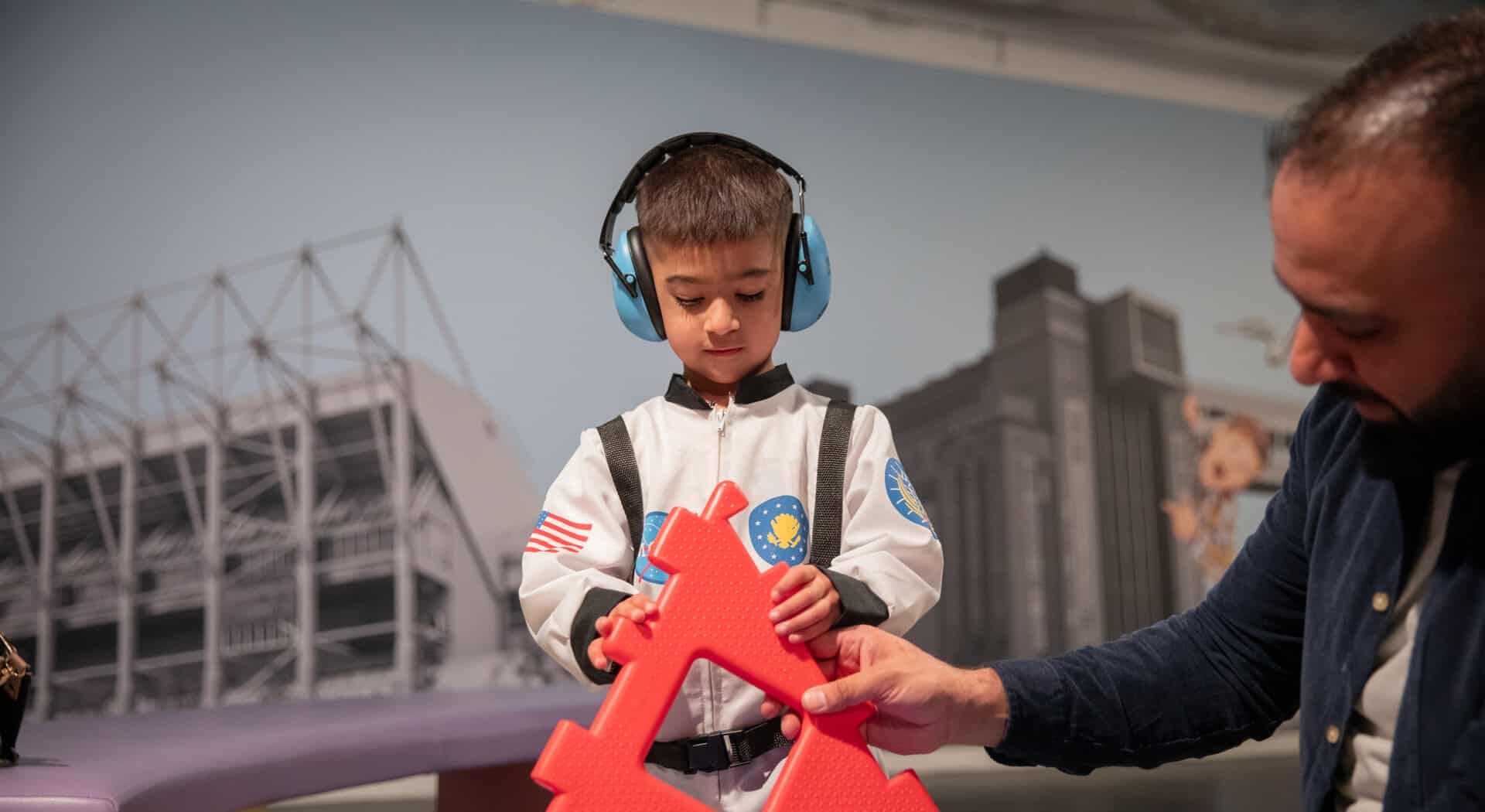

Across Europe, science centres are working to engage broader and more diverse audiences. Yet many are grappling with the same challenge: how do we ensure that science is genuinely accessible, welcoming and relevant to everyone?
At Newcastle’s Life Science Centre, accessibility and inclusion are not programmes that sit alongside our work. They are principles that influence how we make decisions, allocate resources, develop partnerships, design experiences and measure success.
Since opening in 2000, Life has welcomed millions of visitors through hands-on exhibits, science shows, curriculum-linked workshops and events for audiences of all ages.
Over time, our understanding of accessibility and inclusion has evolved significantly. Today, our ambition is to be recognised as one of Europe’s most accessible and inclusive science centres.
For us, accessibility and inclusion are closely linked but distinct.
Accessibility is about removing barriers to participation. These may be physical, financial, sensory, cognitive, cultural or practical.
Inclusion goes further. It is about creating environments where people feel welcome, respected, represented and confident to participate.
Removing barriers enables participation. Inclusion ensures that participation is meaningful.
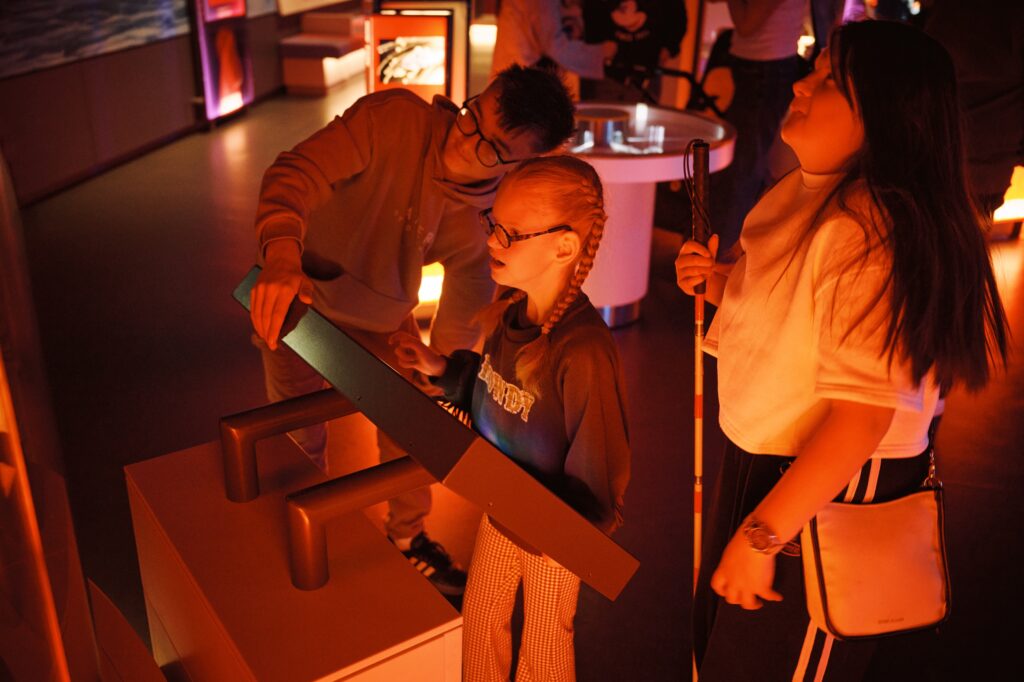
“Accessibility is about removing barriers. Inclusion is about creating belonging. Success is not measured simply by who walks through our doors, but by whether people feel this place is genuinely for them.”
What we have learned
Five Leadership Lessons
1. Listen before you design
The most effective solutions are rarely developed in isolation. They emerge through listening to communities and involving people with lived experience in shaping change.
2. Work with communities, not for them
Long-term partnerships create trust, challenge assumptions and help ensure that decisions are grounded in reality rather than good intentions.
3. Inclusion benefits everyone
Many changes initially introduced for specific audiences improve the experience for a much wider range of visitors.
4. Small changes can have a major impact
Accessibility is not always about significant investment. Often it is the cumulative effect of many small improvements that transforms a visitor’s experience.
5. Culture matters as much as buildings
Physical accessibility matters. But lasting inclusion depends upon organisational culture, leadership commitment and the everyday behaviours of colleagues.
Leadership Matters
Accessibility and inclusion have become strategic priorities because they are central to Life’s charitable purpose.
Our Board of Trustees has championed this work and recognises that broadening participation is not simply a visitor experience issue, but a governance and leadership responsibility.
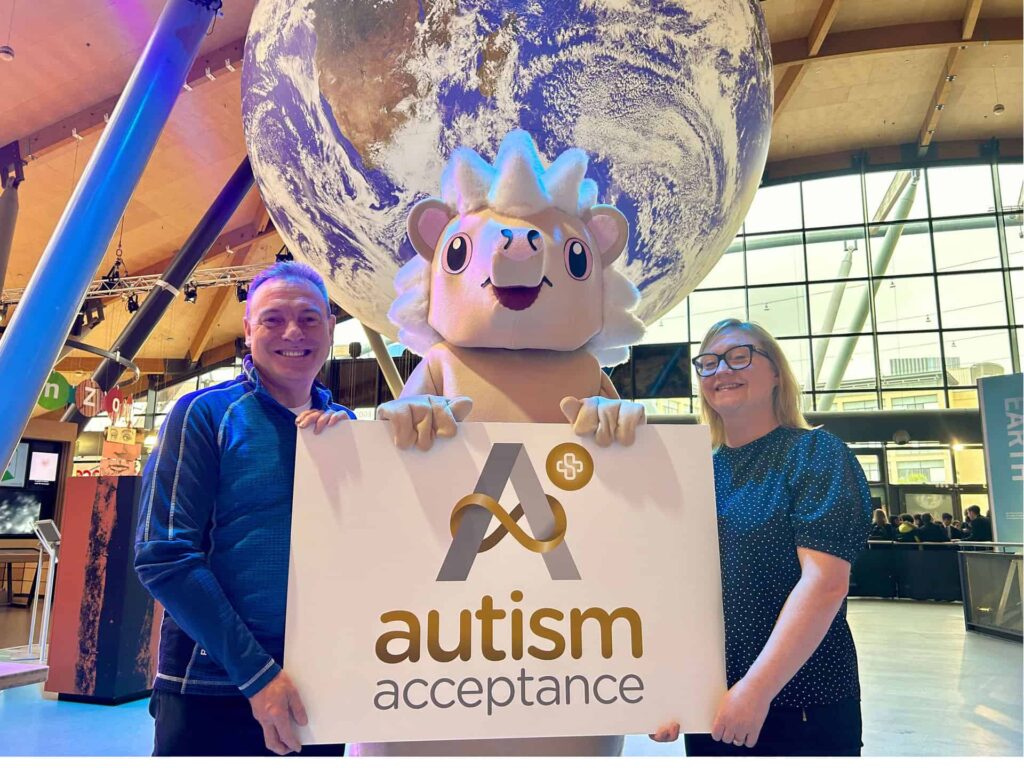
“Accessibility and inclusion are not optional enhancements to our mission – they are fundamental to it. As Trustees, our role is to ensure these principles shape decision-making across the organisation, not sit on the margins of it.”
Embedding accessibility and inclusion requires investment, accountability and a willingness to challenge established assumptions. At Life, those principles are increasingly influencing organisational strategy, major projects, workforce planning and future development.
Building Partnerships That Drive Change
Partnerships have played a critical role in our journey.
One example is our work with The West End Schools’ Trust (WEST), a collaboration of schools serving communities in some of the most disadvantaged areas of Newcastle.
What began as science clubs has evolved into a much broader programme of engagement including funded visits, outreach activities and opportunities for young people to meet scientists and discover pathways into STEM careers.
David Jones, Community Liaison Manager said: “The biggest lesson for us was that meaningful change starts with listening. Communities told us what was stopping people from taking part. Our responsibility was to listen, learn and respond.”
Life’s partnership with the North East Autism Society provided another important turning point. Close collaboration with autistic people and their families helped us better understand sensory barriers and practical challenges that can make visitor attractions difficult to navigate.
The result has been a range of adaptations including Relaxed Sunday Sessions, sensory resources, adjusted lighting and sound environments and wider changes to visitor services.
Yet perhaps the most important outcome was a shift in mindset.
Rather than asking visitors to adapt to us, we increasingly seek to adapt experiences to meet the needs of different visitors.
Inclusive Learning
Science centres have an important role to play in supporting learners who may not thrive within traditional education settings.
Life works closely with schools, home-educated families, children with Special Educational Needs and Disabilities (SEND), organisations and community partners to ensure that learning experiences are flexible, engaging and accessible.
Dedicated home education programmes, tailored workshops and targeted outreach initiatives all contribute to widening participation.
Francesca Nichols, Head of Schools and Community Engagement, said: “Our aim is not simply to provide access to science learning. It is to create environments where every learner can participate, contribute and succeed. Different learners require different approaches and that should be seen as a strength, not a challenge.”
Life also brings together educators, business leaders, researchers and community partners to share learning and improve practice across the region.
Designing an Inclusive Visitor Experience
Inclusion begins long before someone arrives at the science centre.
Accessible information, visual stories, sensory guidance and translation tools help visitors understand what to expect and make informed decisions before their visit. Research suggests that increasing familiarity can reduce anxiety and improve confidence.
Within the science centre, consultation and feedback have informed physical adaptations, sensory adjustments and practical improvements over many years. These include accessible reception areas, wheelchair-friendly café spaces, British Sign Language shows, sensory resources, open-door planetarium screenings and quieter visitor sessions.
Bethan Ross, Head of Experience and Audience Research said: “Inclusion often comes down to hundreds of small decisions. The way we greet visitors, the information we provide and our willingness to adapt can make the difference between someone feeling anxious and someone feeling welcome.”
One visitor, Freya, highlighted that red tape marking part of an exhibit was difficult to see. It was replaced immediately with yellow markings, improving the experience for her and many other visitors.
Small changes matter.
Removing Financial Barriers
Barriers are not always physical or sensory.
For many individuals and families, affordability can be the biggest obstacle to participation, particularly in one the UK’s poorest regions.
Life has welcomed more than 12,000 visitors through the government-funded Holiday Activities and Food programme and has provided thousands of additional funded visits through partnerships with schools, local authorities and community organisations.
Discount schemes – typically reducing the entry price by two thirds – and affordability initiatives help ensure that financial circumstances do not prevent people from accessing science experiences.
Broadening participation requires us to think about who cannot attend and why.
People and Culture
Visitors experience the culture of an organisation through the people they encounter.
At Life, accessibility and inclusion influence recruitment, induction, training and professional development. Colleagues receive training covering topics including autism acceptance, deaf awareness, visual impairment awareness and LGBTQ+ inclusion.
Kellie Steinhauer, Head of People, said: “Inclusive practice cannot belong to one team. It has to be understood, valued and applied across the organisation. Recruitment, onboarding and staff development all help create that shared understanding.”
Inclusive recruitment practices seek to minimise barriers and widen opportunities for people from diverse backgrounds and experiences.
This cultural foundation is one of Life’s greatest strengths.
Sharing What We Learn
Life’s work has attracted regional, national and international recognition including Ecsite’s Mariano Gago Award, Autism Acceptance Gold Plus recognition and multiple accessibility awards within the tourism sector.
But awards are not the goal.
The greatest validation comes from visitors and families who tell us that Life is somewhere they feel safe, welcomed and understood.
The team is increasingly asked to share its learning through conferences, publications and professional networks. Yet we continue to see accessibility and inclusion as a journey of continuous improvement rather than a destination.
Looking Ahead
For many years, science centres have asked:
How do we attract more diverse audiences?
Perhaps that is the wrong question.
A better question might be:
What is it about our organisations that still tells some people they do not belong?
If accessibility depends on a handful of committed individuals, it is fragile.
If inclusion sits outside strategy, budgets and governance, it is temporary.
And if people continue to experience our organisations as places designed primarily for someone else, then the barrier is not them.
It is us.
At Life, we have learned that accessibility and inclusion are not about helping people fit into our organisation.
They are about reshaping our organisation to fit the people we exist to serve.
Because if we genuinely believe that science is for everyone, then every decision we make should prove it.